Designing for impact: Joshua Hunt on resilience and user-centred health services
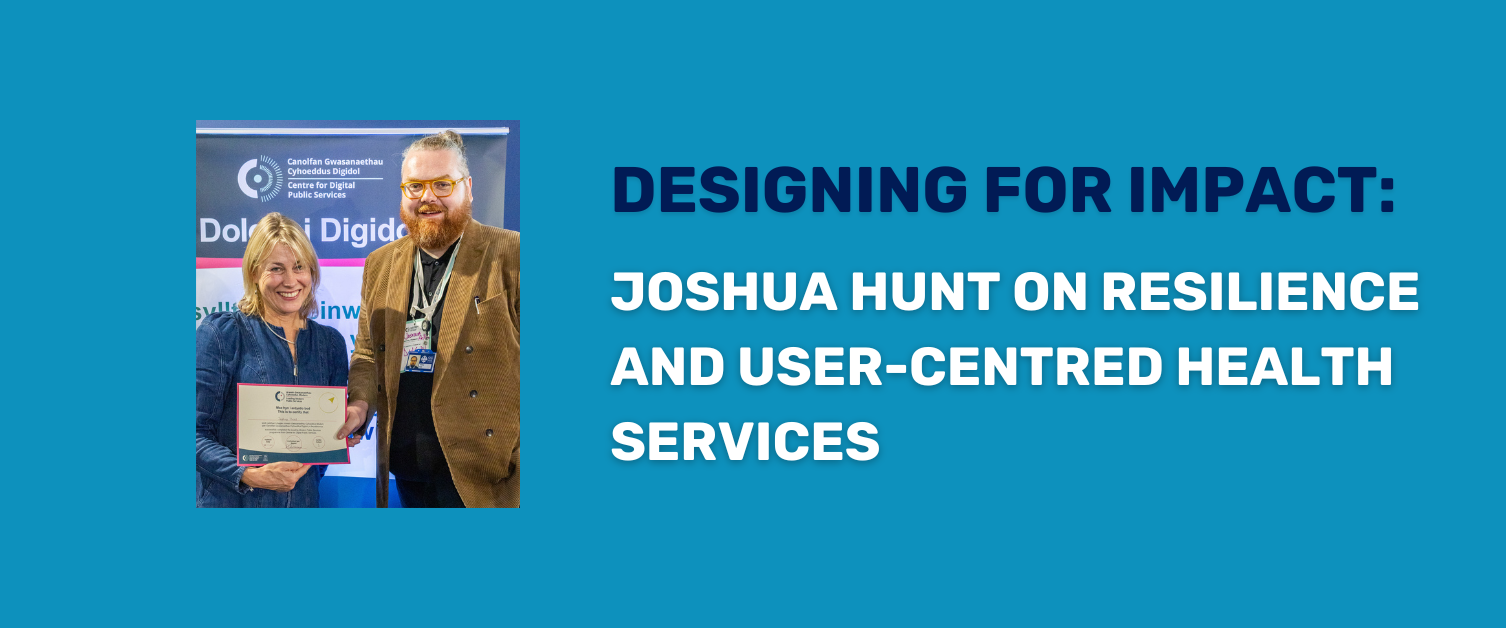
Joshua Hunt, Head of Agile Delivery at Digital Health and Care Wales (DHCW) recently spoke at the Dolenni Digidol event and has shared his reflections on his experience.
I had the privilege to attend and speak at the Dolenni Digidol event as part of the alumni panel. A year on from completing the Leading Modern Public Services programme, I’ve been reflecting on how it shaped me. Not only in terms of tools and theory, but in how I approach resilience, how I build communities around shared challenges, and how I think about services in the round.
When I joined the course, I was leading the Welsh Immunisation System and other national digital health services. The programme gave me the space to pause and think differently, not just about delivery, but about the fundamentals of public service leadership: how we create clarity when resources are tight, how we keep user needs at the heart of what we do, and how we connect with others facing the same pressures.
One of the biggest takeaways was the Digital Service Standards for Wales. They became a touchstone for me, reminding me that good services aren’t about shiny tech, they’re about being simple, human, and designed around the people who use them. That’s guided so many of the decisions I’ve made since.
Resilience has been central. Over the last year we’ve rolled out the biggest change to vaccinations in Wales for decades, bringing COVID, RSV and flu into one system. We’ve had real bumps along the way: unexpected failures, difficult headlines, and even thousands of incorrect appointment letters.
Before the course, I might have seen resilience as just keeping calm under pressure. But I came away understanding it differently: resilience is about recovery, about creating teams that can bounce back quickly, and about using setbacks as fuel for improvement. That mindset has been vital, because transformation at this scale will always be messy. What matters is how we respond.
Another shift for me has been how we think about vaccinations as a service. Not just an IT system, but an end-to-end service that people experience, from invitations to booking, to receiving a jab in a clinic. That perspective, encouraged by the programme, has made me much clearer about what our role in Digital Health and Care Wales is: we’re service owners, accountable for the whole user journey.
That’s also why I’ve helped start a community of practice for service ownership across NHS Wales. Because the reality is, none of us can do this alone. Whether you’re in health, housing, policing or education, we’re all wrestling with the same question: how do you define, own, and continually improve a public service in the digital era?
Linked to that, the course really reinforced the importance of user-centred design. For me it was a lightbulb moment: we couldn’t keep designing services around organisational convenience; we had to build them around people.
After the programme finished, I began working with our Head of UCD to recruit NHS Wales’ very first dedicated UCD team. The team includes service designers, user researchers, and content designers. That’s a huge step forward for us, and one that’s directly rooted in the learning and confidence I gained here.
The course, and the wider CDPS community, gave us not just the framework, but also the contacts to draw on as we built that team. That external support and inspiration has been crucial in turning an idea into reality.
The challenges ahead remain significant. Demand is rising, expectations are changing, and digital is no longer optional, it’s fundamental. For me, the path forward is about holding on to the habits this programme instilled: being deliberate about resilience, staying anchored in the Digital Service Standards, and investing in communities of practice so no one is left to solve these problems in isolation.
So if you’re considering the programme, my advice is simple: go in with openness, and come out with a network and a set of principles that will guide you long after the sessions end. And if you’re already part of this alumni community, let’s keep building those connections, because the challenges ahead are too big for any of us to face alone.